
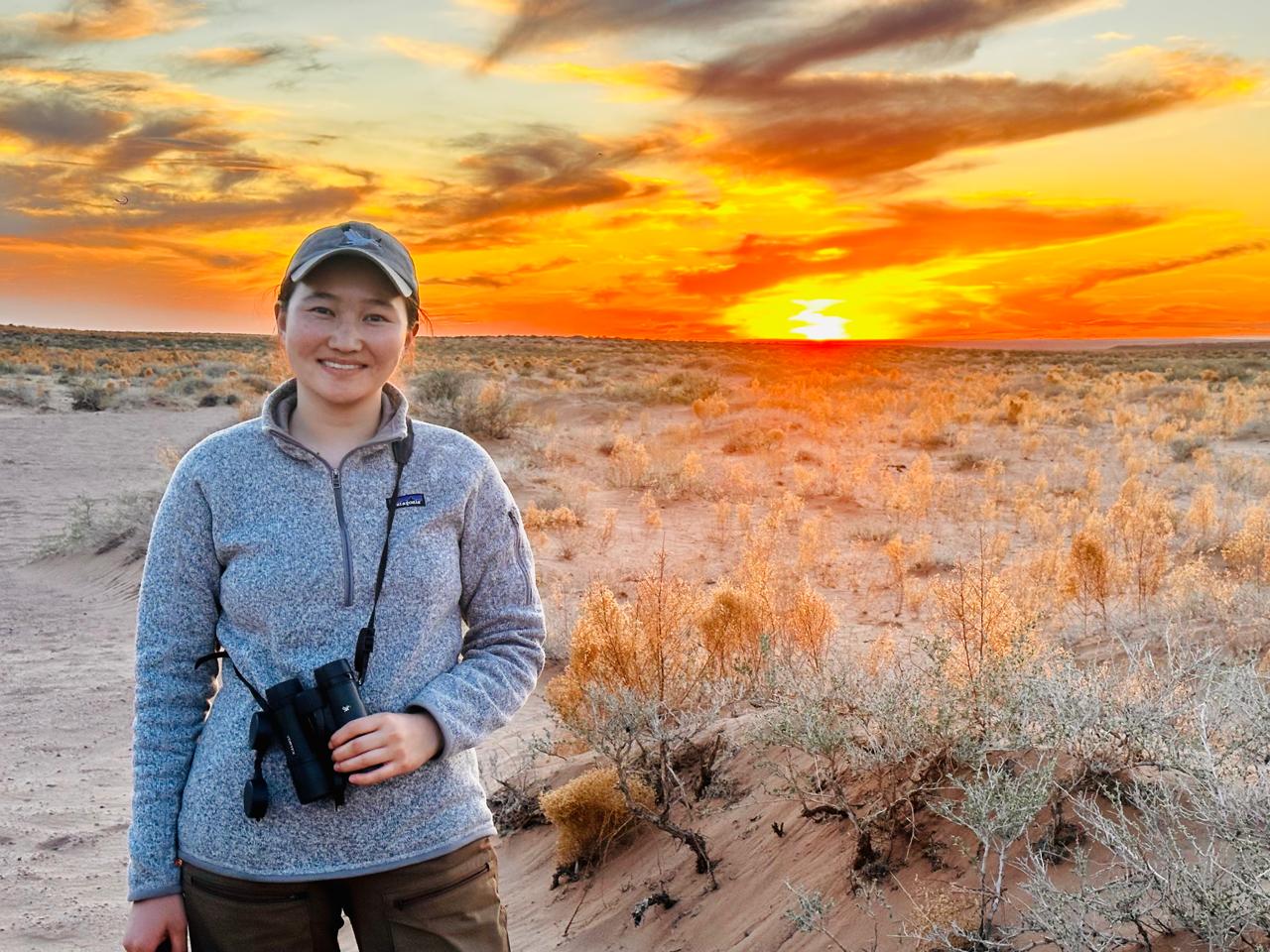
On November 5, WINGS will induct four new Fellows during our 2026 Women of Discovery celebration in New York City. In a special Q&A series, we are sharing a little bit about each honoree. Bayarmaa Chulunbaat is a wildlife ecologist and conservationist at the Wildlife Science and Conservation Center of Mongolia (WSCC) working across the Gobi–steppe to protect some of Central Asia’s most endangered species. As Conservation Science Manager, she brings an interdisciplinary approach to wildlife conservation, combining camera trapping, GPS telemetry, dietary analysis, spatial monitoring, and conservation social science to investigate species ecology, movement, and the human dimensions of coexistence. She leads the analytical work of the Sky Rangers Project — an innovative initiative that deploys GPS-tagged cinereous vultures, Mongolia’s largest raptor, as living sentinels across the landscape. Her research also spans snow leopard population ecology in the Gobi’s Khurkh Mountain Range, saiga–livestock dietary interactions, and the socio-ecological impacts of railway expansion on khulan migration.
Tell us your story. How did you get involved in science and your field specifically?
I grew up in a nomadic herder family in the Altai Mountains of western Mongolia, one of the most biodiverse regions in Central Asia. My earliest lessons in ecology came not from textbooks, but from the traditional knowledge of my Zakhchin community, which has coexisted with wildlife for generations.
As a child, I shared the landscape with snow leopards, Mongolian saiga, vultures, and other wildlife. A turning point came when I encountered a snow leopard injured by a steel trap. Seeing that suffering transformed my curiosity into a sense of responsibility. I wanted to understand wildlife more deeply and find ways to protect it.
That experience led me to study ecology and conservation biology. Today, I work as a wildlife ecologist and conservation practitioner, combining community engagement, ecological research, and emerging technologies to address some of Mongolia’s most pressing conservation challenges. My work focuses on endangered species conservation, human-wildlife coexistence, wildlife movement ecology, and innovative approaches to combat illegal hunting.
What is something you would like people to understand about your field and work?
Conservation is ultimately about people as much as it is about wildlife.
Scientific data are essential, but lasting conservation outcomes are only possible when local communities are part of the solution. The people who live closest to wildlife often hold generations of ecological knowledge and have the greatest stake in protecting these landscapes.
I would also like people to understand that conservation is not simply about preventing species extinction. It is about safeguarding ecosystems, cultural heritage, and the relationships that connect people and nature. When we protect wildlife, we are also protecting the health and resilience of our planet.
What are the greatest barriers to more women working in science?
Many women continue to face barriers related to access, representation, and opportunity.
In field-based sciences, women are often underrepresented in leadership positions and may have fewer opportunities for mentorship, professional networks, and long-term career development. These challenges can be even greater for women from rural communities and developing countries.
At the same time, I have seen remarkable progress. Increasingly, women are leading scientific discoveries, conservation initiatives, and policy decisions around the world. Expanding mentorship, funding opportunities, and visible role models can help ensure that more young women see science as a place where they belong and can thrive.
What gets you up in the morning?
Hope.
Every day I wake up knowing that there is still work to do to protect wildlife and the ecosystems they depend on. Whether I am analyzing data, working with local communities, or testing new conservation technologies, I am motivated by the possibility of creating real and lasting impact.
I am especially inspired by the idea that a single observation, a single conversation, or a single innovative idea can change the future of a species. Knowing that my work contributes to something larger than myself keeps me moving forward.
What’s your next challenge?
My next challenge is scaling innovative conservation solutions to address illegal wildlife hunting across Mongolia’s vast landscapes.
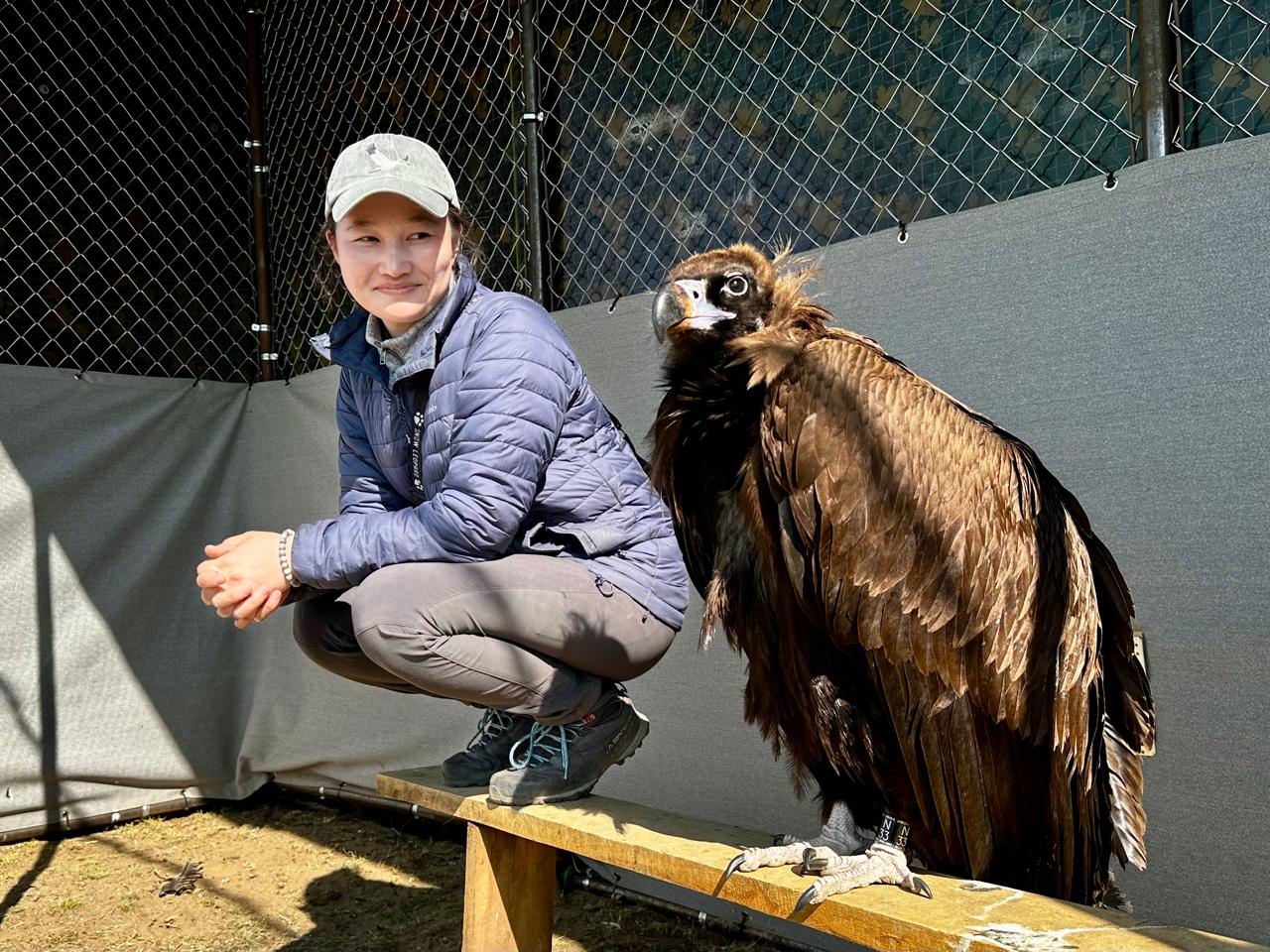
I am currently managing the Sky Rangers Project, which uses vultures equipped with GPS trackers, behavioral sensors, and cameras as sentinels for detecting wildlife mortality events in remote regions. Our goal is to build an AI-powered early-warning system that can help conservationists rapidly identify potential poaching incidents and improve wildlife protection at unprecedented scales.
Beyond the technology itself, the challenge is creating a model that is scientifically robust, financially sustainable, and adaptable to conservation efforts around the world.
Describe yourself in three words.
Curious. Resilient. Purpose-driven.